In spinal deformity correction, spondylolisthesis reduction, and complex fusions, reduction pedicle screws play a critical role by allowing controlled approximation of the rod to the screw head. Two popular options are the Regular Polyaxial Reduction Pedicle Screw and the Dual Thread Polyaxial Reduction Pedicle Screw.
Regular Polyaxial Reduction Pedicle Screw features a standard single-thread design with a mobile polyaxial head (typically offering 25°–60° angulation). The extended reduction tabs or threaded mechanism enable powerful, controlled rod reduction. This design provides excellent versatility for rod capture in MIS or open procedures and simplifies alignment in challenging anatomy. However, in patients with variable bone density or osteoporosis, standard threads may offer comparatively lower initial purchase and pull-out resistance.
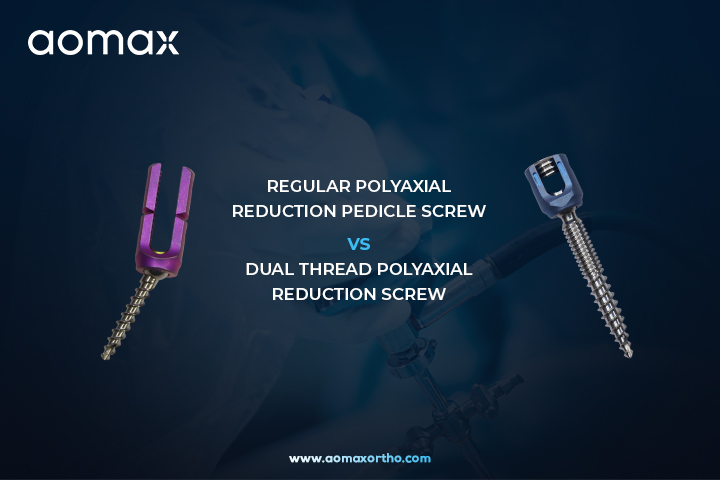
Dual Thread Polyaxial Reduction Pedicle Screw combines the same polyaxial reduction head with a dual-thread shaft — usually a coarse thread distally (for strong cancellous bone purchase in the vertebral body) and a finer thread proximally (for enhanced cortical engagement in the pedicle). This advanced thread pattern significantly improves insertion torque and pull-out strength (often 25–60% higher than single-thread designs in biomechanical studies). It also allows faster screw insertion due to the dual-lead effect while maintaining the reduction capability through extended tabs.
Quick Comparison:
- Rod Reduction & Alignment — Both excellent; polyaxial head offers similar multi-planar flexibility.
- Bone Purchase & Fixation Strength — Dual Thread superior, especially in osteoporotic or poor-quality bone.
- Insertion Speed — Dual Thread faster due to optimized thread design.
- Pull-out Resistance — Dual Thread provides higher biomechanical stability.
- Best Use — Regular for standard cases with good bone quality; Dual Thread for revision, osteoporosis, or when maximum anchorage is required.
Both screws are typically titanium for biocompatibility and strength. The choice ultimately depends on patient bone quality, pathology, and surgeon preference for construct stability.
In summary, while Regular Polyaxial Reduction Screws offer reliable performance and ease of use, Dual Thread versions deliver enhanced fixation and pull-out strength, making them a preferred upgrade in demanding spinal reconstructions.
Consult product IFU, surgical technique guides, and clinical evidence before use.
Get Connected:
+91 98989 50530 | ortho@advinhealthcare.com | www.advinortho.com